Stories · Story 2
The five monkeys
Question the rule before the rule defines you.
Some rules protect us. Some are just old fear that nobody has checked in years. This story is about telling them apart.
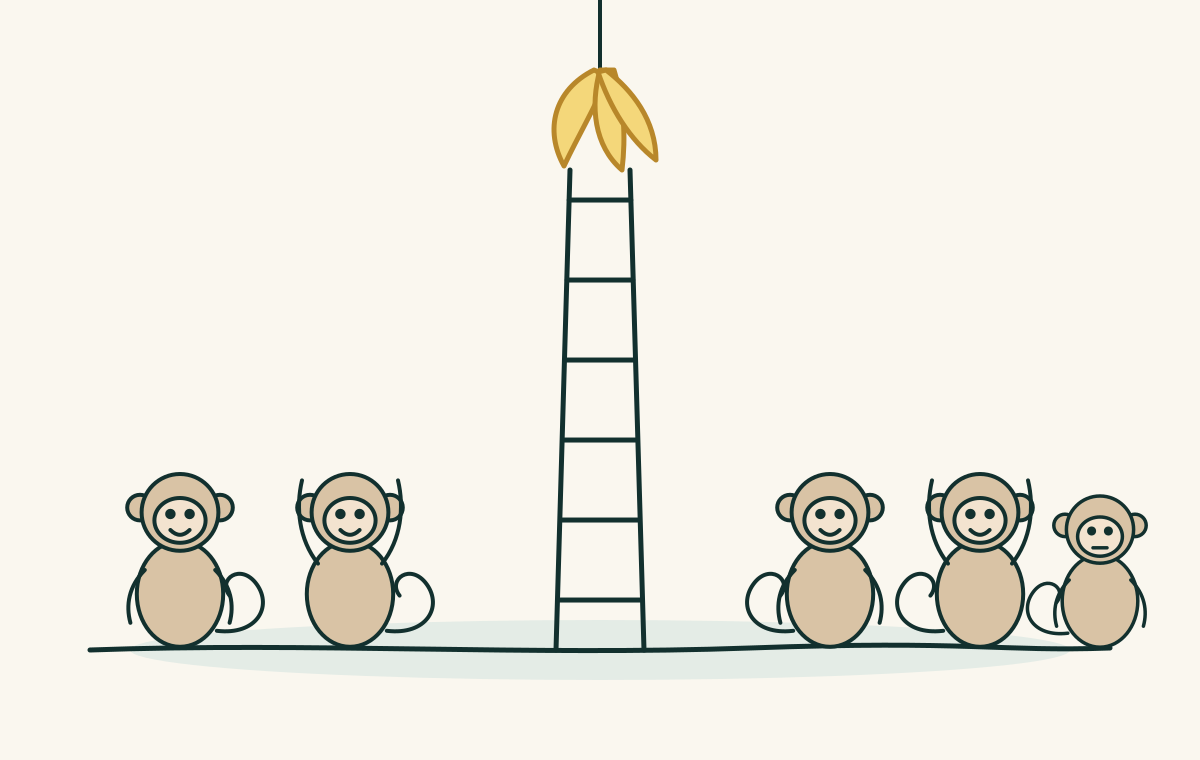
The ladder and the bananas
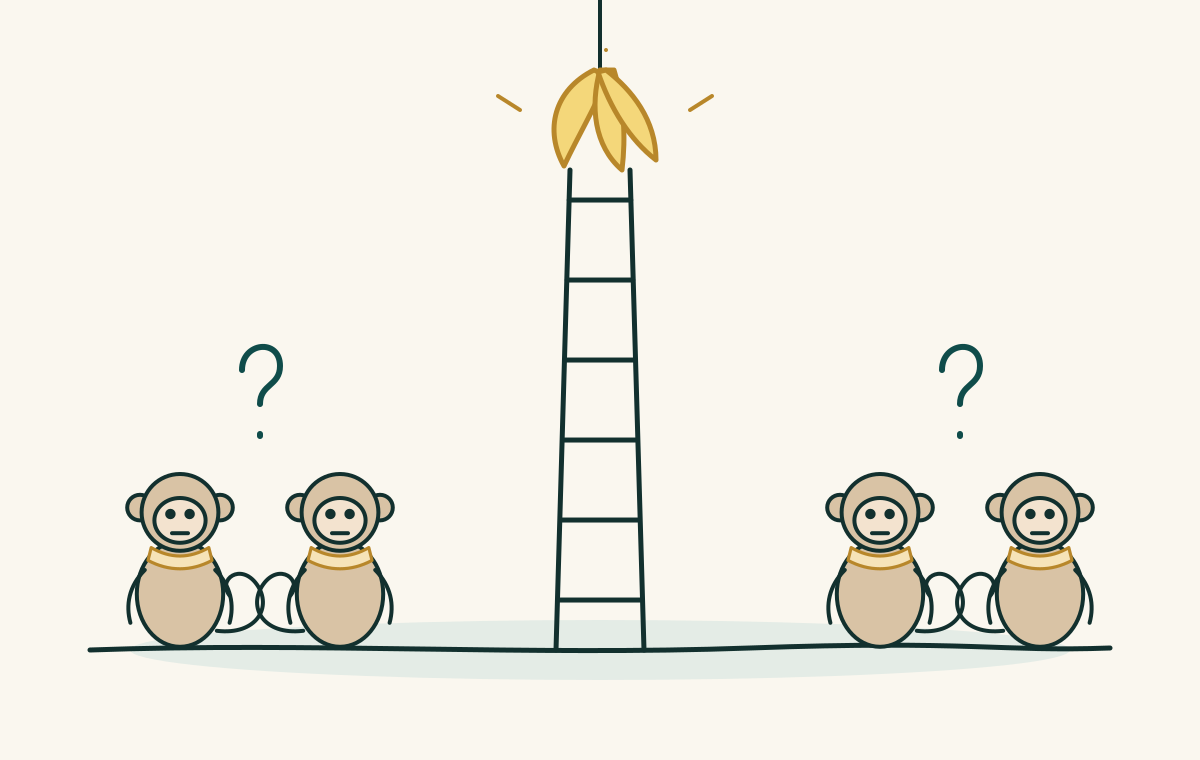
Five monkeys were placed in a room. In the middle stood a ladder. Above it hung a bunch of bananas. The reward was obvious. One monkey only had to climb.
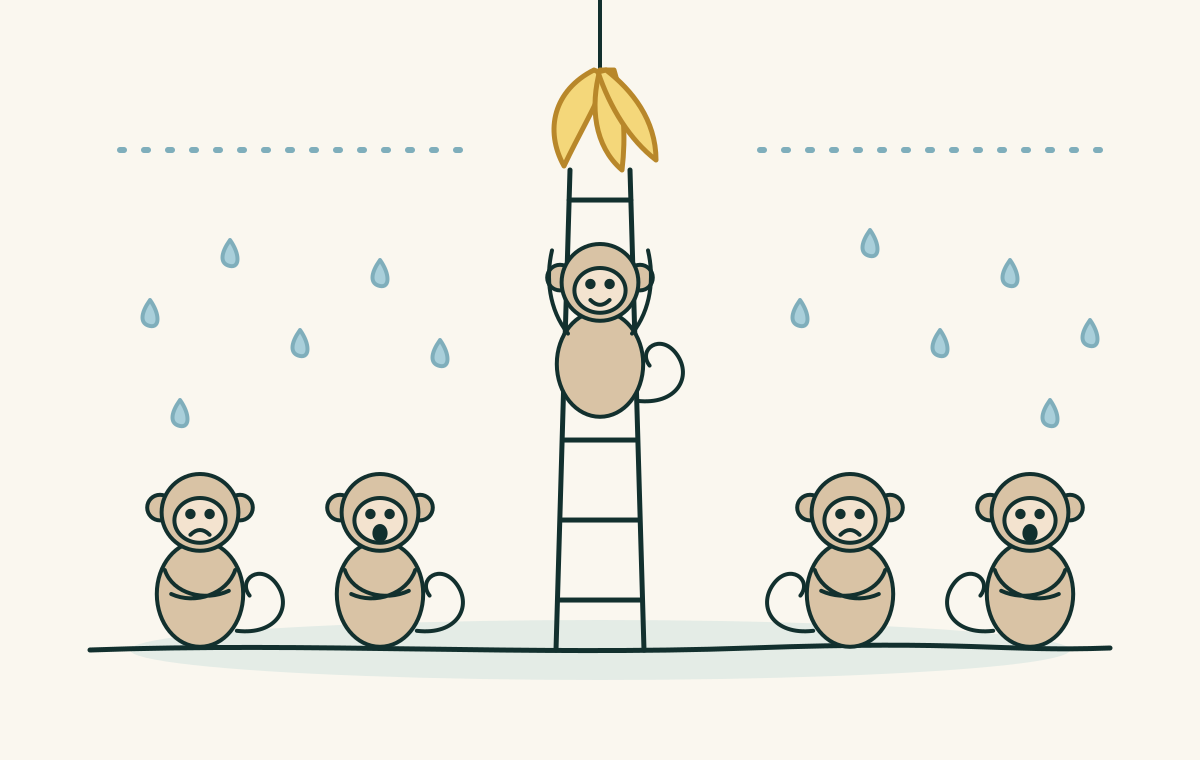
The cold water
The first monkey started up the ladder. Before it reached the top, freezing water poured down on the others. They scattered and shivered. When another monkey tried, the water came again. Soon the whole group linked the ladder with pain.
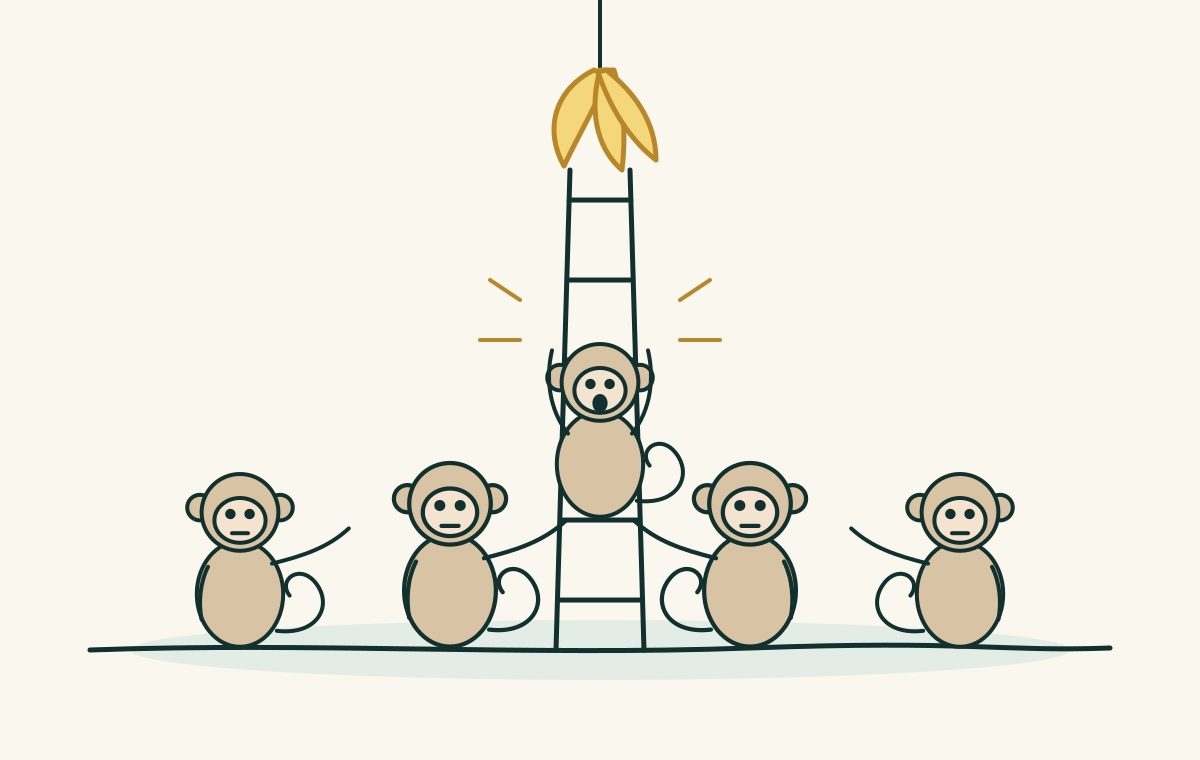
Fear became a rule
After that, whenever one monkey moved toward the ladder, the others dragged it back. They did not wait for the water. Stopping the attempt felt safer than risking the punishment. Nobody had to tell them to do it.
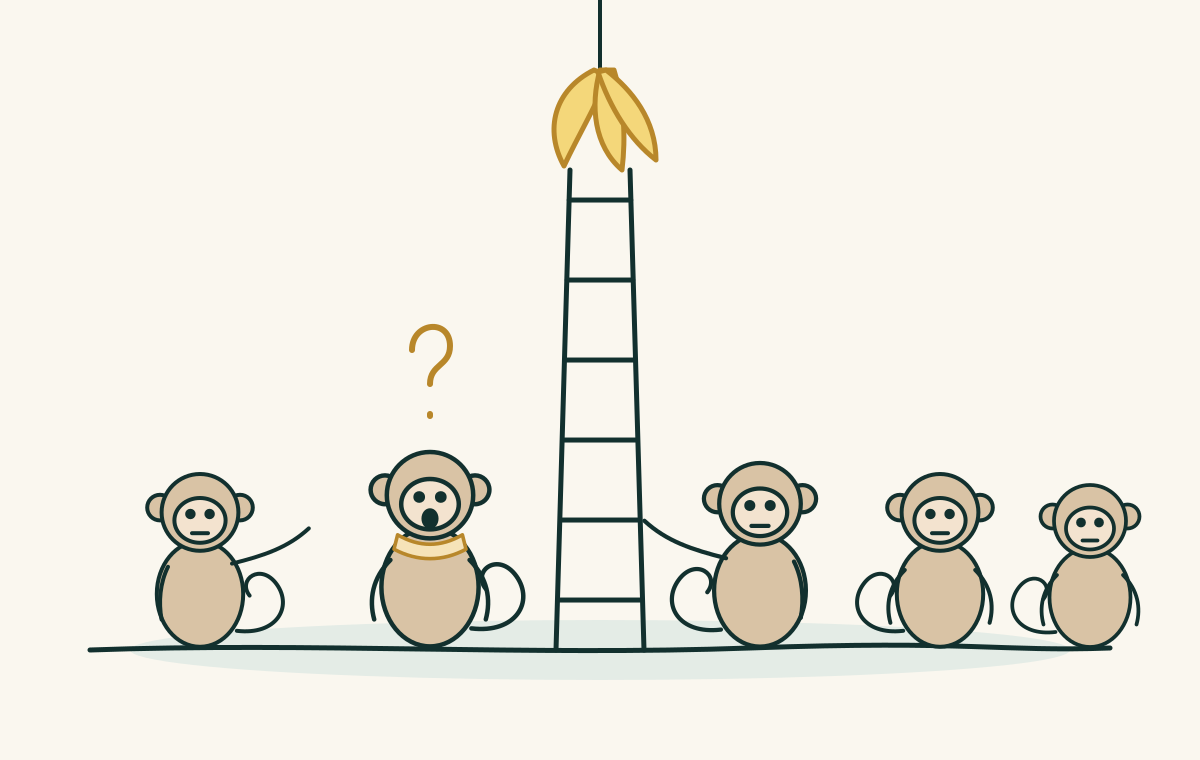
The newcomer
Then one monkey was swapped for a newcomer who had never felt the water. It saw a ladder and bananas, so it began to climb. The others pulled it down. It could not understand why. After a few tries it gave up. Before long, it was helping to stop others too.
Nobody knows why
One by one, every original monkey was replaced. In the end, not one monkey in the room had ever been soaked. Still, the ladder stayed untouched.
If you could ask them why, the honest answer would be: “We don’t know. This is just how things are done here.”
One honest note: this is best read as a parable about going along with the group, not as a verified experiment. Its value is the question it leaves behind.
What the story shows
We do not learn only from our own experience. We also learn by watching how other people react. That is useful. It lets us avoid dangers without testing every one ourselves. But the same skill can keep a fear alive long after the danger is gone.
It gets stronger when a group acts certain. You start to doubt your own judgment because everyone else seems to agree. The group never has to explain the rule. Repeating it is enough to make it feel true.
This does not mean every tradition is wrong. Many rules carry real knowledge. The useful question is whether the reason still exists.
Where it shows up
- At work
- A team keeps a slow approval step because a manager once demanded it. The manager left years ago. New people learn to defend the step before they understand it.
- In families
- A career or a life choice is discouraged because an earlier generation had a hard time. The fear may come from love. Today’s situation still deserves a fresh look.
- Inside your mind
- “Don’t speak up.” “Don’t try again.” “Don’t be different.” In time no group is needed. You hold the old line yourself.
- How it sounds
- “Nobody here does that.” “People like us don’t make it there.” “We tried that once.” These may hold information. They are not complete evidence.
Five questions worth asking
Write briefly and honestly. One sentence each is enough.
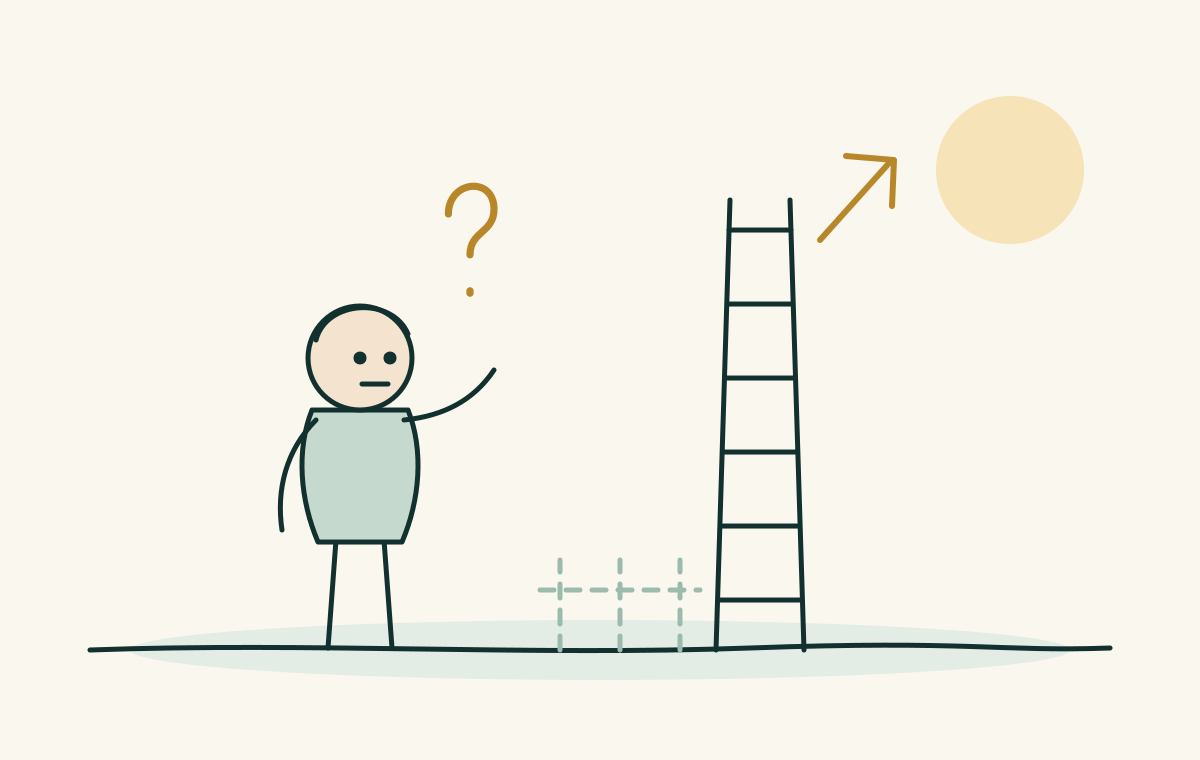
- What rule do I follow mainly because everyone around me does?
- Who first taught me this rule, and what were they dealing with?
- Does the original danger still exist in the same form?
- What supports the rule today? What challenges it?
- What is one safe test I could undo, instead of fully accepting or rejecting the rule?
Write your answers in the brain dump
Try a rule audit
- Write one sentence that starts: “I am supposed to…”
- Name where it came from: a person, a workplace, a culture, a past event or an assumption.
- Describe what the rule was for, as fairly as you can.
- List what has changed since then.
- Choose one small test that protects what matters and lets in new evidence.
Questioning a rule is not rebellion for its own sake. It is checking whether the reason is still there.
A rule deserves respect when it protects something real. It deserves a second look when fear is the only reason left.